You can memorize the CDL manual, pass written exams, and still feel unprepared the first time you sit high in the cab of a tractor-trailer. That gap is exactly why behind the wheel CDL training matters. It is the part of CDL school where driving stops being theory and becomes a job skill – shifting, turning, backing, braking, inspecting, and staying in control when the truck is fully yours.
For most students, this is the make-or-break part of training. A classroom can teach rules. A practice yard and road route teach timing, judgment, and muscle memory. If your goal is to get licensed and get to work fast, you need to know what this training actually includes and what separates useful practice from wasted time.
What behind the wheel CDL training really means
Behind the wheel CDL training is supervised hands-on instruction in a commercial vehicle. It usually starts in a controlled training area where students learn basic control, then moves onto public roads where they practice real traffic situations. The point is not just to log hours. The point is to build the skills you will be tested on and the habits you will need once you are hired.
That includes straight-line backing, offset backing, alley dock or parallel-style maneuvers depending on the program and test format, lane control, turns, intersections, speed management, mirror use, railroad crossings, and defensive driving. For Class A students, it may also include coupling and uncoupling a trailer and learning how trailer movement affects every backing decision.
A good program does not throw students into traffic on day one and hope for the best. It builds from simple to complex. First you learn vehicle familiarity and control. Then you repeat core maneuvers until they become consistent. After that, road driving starts to make sense because you are not using all your focus just to keep the truck moving in the right direction.
Why behind the wheel CDL training matters more than extra classroom time
There is no shortcut around seat time. Commercial driving is physical and visual. You have to feel clutch engagement if you are learning manual. You have to judge trailer swing in real time. You have to learn how long it takes to stop under different speeds and how much room a wide turn actually needs.
This is why employers care about practical readiness, not just whether you passed the written portion. A new driver who has spent quality time in the truck usually shows more confidence, follows instructions better, and makes fewer panic decisions. That matters on the road, and it matters during testing.
The trade-off is simple. Programs that sound fast and cheap but offer limited driving access can leave students underprepared. On the other hand, a stronger behind-the-wheel focus often means you get more value because you spend less time guessing and more time correcting mistakes with an instructor beside you.
What students should practice during behind the wheel CDL training
Every school structures training a little differently, but the strongest programs focus on repetition in the areas that affect test results and job performance the most.
Range skills and yard control
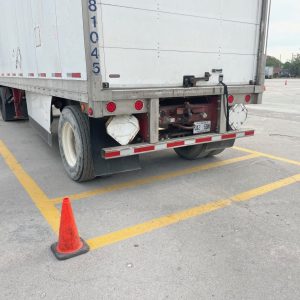
This is where students learn how the truck responds at low speed. Backing is usually the hardest part for beginners because the trailer moves opposite the steering direction, and small corrections matter. Good yard training gives you enough space and enough repetition to understand that movement instead of just trying to survive it.
Students should expect to work on straight backing first, then progress into more difficult maneuvers. The best instructors do not just tell you what to do. They explain why your setup matters, why you got off track, and how to recover without freezing.
Road driving in real traffic
Once you move onto public roads, the focus shifts to awareness and control. You learn lane positioning, mirror scanning, intersection approach, turns, merging, speed adjustments, and how to handle traffic pressure without rushing. These are the skills that separate a student who can pass in the yard from a driver who can operate safely in Orlando-area traffic or on regional routes.
Road training should include different conditions when possible. City streets, industrial areas, stop-and-go traffic, and higher-speed roads all teach something different. Too much yard time without enough road exposure can leave students surprised by how much information they need to process at once.
Pre-trip habits tied to real driving
Pre-trip inspection is often treated like a separate test category, but in practice it supports everything you do behind the wheel. A driver who understands brakes, tires, lights, air systems, and coupling components has a better chance of recognizing a problem before it becomes a road issue.
That is why strong CDL training connects inspection habits to actual vehicle operation. You are not reciting parts for no reason. You are learning how to check the equipment you will be responsible for every day.
How much behind the wheel CDL training is enough?
There is no one perfect number because students learn at different speeds. Some pick up shifting and backing quickly. Others need more repetition, especially if they have never driven anything larger than a pickup truck. What matters most is not just the hour count on paper, but whether you get meaningful time actually operating the vehicle.
Ask practical questions before enrolling. How many students share one truck? How much individual driving time do students get? Is training mostly observation, or are you regularly in the driver seat? Is there enough yard space to repeat maneuvers without being rushed? These details affect your progress more than marketing language does.
If you are working around a job schedule or family responsibilities, it also helps to choose a school that keeps the process efficient. Training and testing in one place can reduce delays, and that matters when your goal is to move from permit to paycheck without unnecessary waiting.
What to look for in a behind the wheel CDL training program
A serious program should be built around access, repetition, and testing readiness. That means enough trucks, enough space, and instructors who know how to correct errors without wasting time. It also means a training flow that matches the real CDL path – permit prep, skills development, road practice, and final testing.
For many students in Central Florida, cost matters just as much as quality. A program can be affordable and still be effective if it gives you real truck time and a clear path to completion. East USA Trucking School stands out here because it combines practical training space, multiple trucks, and on-site third-party state-authorized testing, which helps reduce friction between training and exam day.
Accessibility matters too. If English is your second language, bilingual instruction can make a major difference during both classroom preparation and behind-the-wheel coaching. Clear instruction saves time. It also helps students stay confident when they are learning high-pressure skills like shifting, backing, and road positioning.
Behind the wheel CDL training for different types of students
Not every student starts in the same place, so the right training approach depends on your situation.
If you are brand new to trucking, you need a full foundation. That means pre-trip, range maneuvers, road driving, and test prep all working together. If you already have a CDL but have been off the road, refresher training may be the better fit. In that case, the issue is usually not basic knowledge. It is rebuilding confidence and correcting habits before returning to work.
If you have an automatic restriction and want more job options, behind-the-wheel practice in a manual truck becomes especially important. Manual transmission training is not just about passing one test. It can expand the kinds of equipment you are qualified to operate and give you more flexibility when applying for jobs.
Common mistakes students make during behind the wheel CDL training
The biggest mistake is trying to rush past fundamentals. Students often want to get to road driving quickly, but weak backing setup, poor mirror habits, or inconsistent clutch control will show up later. Slow, correct repetition usually saves time in the long run.
Another mistake is treating instruction like a script. Real driving is not memorization only. You need to understand what the truck is doing and why. If you rely only on fixed steps, one small change in setup or traffic flow can throw you off.
Some students also underestimate how much confidence affects performance. Nervousness is normal, especially early on. The answer is not to avoid hard maneuvers. It is to practice them enough that your body and eyes know what to do before panic takes over.
The real value of getting this part right
Behind the wheel CDL training is where future drivers prove to themselves that they can do the work. It turns a permit holder into someone who can inspect a truck, control it in tight spaces, handle traffic, and show up for a test or a job with a real shot at success.
If you are comparing schools, look past generic promises and focus on what gets you ready faster: actual drive time, enough training space, qualified instructors, accessible funding options, and a path that keeps training and testing moving. The right program does more than help you pass. It helps you start earning with skills you can trust the first time the road is yours.