A Class A CDL can put you on the road toward a career that does not require a four-year degree, years of unpaid experience, or waiting for the right office job to open up. If you are asking how to get a class a cdl, the path is straightforward: qualify, earn your permit, complete required training, pass the skills test, and choose the driving work that fits your goals.
The details matter. A missed document, an automatic-only restriction, or training that does not give you enough time behind the wheel can slow down your start. Here is what Florida drivers need to know before they begin.
What a Class A CDL Lets You Drive
A Class A commercial driver license is generally required to operate a combination vehicle with a gross combination weight rating of 26,001 pounds or more when the trailer or towed unit has a rating over 10,000 pounds. That includes tractor-trailers, many flatbeds, refrigerated trailers, tankers, and other heavy commercial combinations.
This license gives you more career options than a Class B CDL because it qualifies you for larger combination vehicles. It does not automatically make every trucking job available, though. Some jobs require endorsements, a clean driving record, specific experience, or the ability to drive a manual transmission.
Age also affects where you can work. At 18, you may be eligible to drive commercially within Florida. To drive across state lines, transport hazardous materials, or access many long-haul opportunities, you generally need to be at least 21.
Meet the Basic Florida CDL Requirements First
Before you spend money on training, make sure you can meet the state and federal requirements. You need a valid Florida driver license and documentation that establishes identity, legal presence, and Florida residency. You must also be able to pass the required vision screening.
Most Class A applicants must obtain a Department of Transportation medical examiner’s certificate. The medical exam checks whether you are physically qualified to safely operate a commercial vehicle. Certain health conditions, medications, vision issues, and hearing concerns may require additional documentation or follow-up. Do not guess about your medical eligibility. Handle that question early so it does not become a problem on test day.
Your driving history matters, too. A past ticket does not necessarily prevent you from getting a CDL, but serious violations, suspensions, or disqualifying offenses can affect your eligibility and future job options. Be honest with a school and with potential employers about your record.
How to Get a Class A CDL: Start With Your CLP
Your first licensing milestone is the Commercial Learner’s Permit, often called a CLP. The permit allows you to practice driving a commercial vehicle while accompanied by a properly licensed CDL holder.
To earn a Class A CLP in Florida, you must pass the required knowledge tests. These typically cover general knowledge, air brakes, and combination vehicles. You may also need additional knowledge tests if you plan to pursue endorsements such as tanker, doubles/triples, passenger, school bus, or hazardous materials.
The permit tests are not something to take lightly. The wording can be technical, and questions often focus on safety rules, inspection procedures, braking, coupling, shifting, space management, and emergency situations. Study the Florida CDL handbook, but do more than memorize answers. You need to understand why the rule exists because the same information comes back during training and the skills test.
After your CLP is issued, federal rules require you to hold it for at least 14 days before taking the CDL skills test. Use that time wisely. A permit is the beginning of hands-on learning, not the finish line.
Complete ELDT With a Qualified Training Provider
First-time Class A CDL applicants must complete Entry-Level Driver Training, known as ELDT, before taking the skills test. This is a federal requirement. Your training provider must be listed on the federal Training Provider Registry and submit your completed training record before you can move forward with testing.
ELDT includes theory instruction and behind-the-wheel training. The goal is not simply to put hours on a clock. You need practical knowledge of vehicle inspection, basic control, defensive driving, highway driving, railroad crossings, turns, backing, coupling and uncoupling, and managing a large vehicle in traffic.
Training quality makes a real difference here. A low price is valuable, but only if you receive enough time in the truck to build repeatable skills. Look for a program that gives you access to the kind of equipment you will test in, a practice yard with room to maneuver, and instructors who correct mistakes before they become habits.
For Orlando-area students, East USA Trucking School combines Class A instruction with on-site third-party state-authorized testing, a large practical training area, and bilingual Spanish-speaking support. Having training and testing in one location can reduce scheduling problems and help you stay focused on the next step.
Train for the Three Parts of the Skills Test
The Class A CDL skills test has three major parts: the pre-trip inspection, basic vehicle control, and the road test. You must pass each section before moving on to the next.
Pre-Trip Inspection
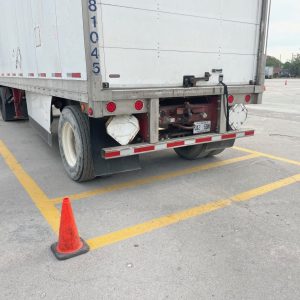
During the pre-trip, you explain how you would inspect the vehicle and identify safety-critical items. Expect to cover components such as the engine compartment, steering system, suspension, brakes, tires, wheels, lights, coupling equipment, trailer connections, and emergency equipment.
The pre-trip can feel like a lot of memorization at first. The best approach is to learn a consistent inspection order and understand what you are checking for. Instead of reciting random lines, practice identifying whether a part is securely mounted, not cracked or damaged, free of leaks, and working correctly when applicable.
Basic Control Skills
Basic control takes place in a controlled area and tests your ability to handle the truck at low speed. Depending on the test setup, you may perform straight-line backing, offset backing, alley docking, and other maneuvers.
This section rewards patience more than speed. Use your mirrors correctly, get out and look when permitted, and make small corrections before a mistake grows. Drivers often struggle because they rush, oversteer, or stop watching the trailer’s movement.
Road Test
The road test evaluates how you operate in real traffic conditions. The examiner looks at lane control, turns, speed management, following distance, signaling, gear selection, intersection approach, railroad crossing procedures, mirror use, and overall judgment.
You do not need to drive like you have ten years of experience. You do need to drive safely, predictably, and legally. Smooth turns, proper lane placement, full stops, and consistent mirror checks matter more than trying to impress the examiner.
Choose Manual Training if You Want Fewer Limits
Many new drivers train and test in an automatic truck because it is easier to learn and commonly used by fleets. That can be the right choice if your goal is to get licensed quickly and work for an employer with automatic equipment.
However, testing in an automatic vehicle can result in an automatic transmission restriction on your CDL. That restriction limits you from operating commercial vehicles with a manual transmission. Some employers do not care, while others still use manual trucks or prefer applicants without the restriction.
If you want the widest range of job options, ask about manual transmission training before enrollment. Removing a restriction later is possible, but it means more practice, another skills test, and additional cost. It is usually easier to make the right choice at the start.
Understand Endorsements Before You Need Them
Endorsements can expand the types of loads and equipment you are allowed to handle. Tanker and doubles/triples endorsements are common for Class A drivers. A hazardous materials endorsement can open additional work, but it involves a background check and additional federal requirements.
You do not need every endorsement before getting your first driving job. In fact, trying to do everything at once can delay your license. Start with the work you want to pursue. A driver interested in dry van, refrigerated freight, or local general freight may not need the same credentials as someone pursuing fuel hauling or specialized freight.
Plan for Cost, Time, and Job Readiness
The time needed to get a Class A CDL depends on your schedule, how quickly you learn, whether you pass each test on the first attempt, and the availability of testing appointments. Some students can move through the process in a few weeks, while others need more time around work and family responsibilities.
Budget for permit fees, medical certification, training, testing, and possible retest fees. Ask schools for clear pricing and find out what is included. You should know whether tuition covers classroom instruction, truck time, use of the vehicle for testing, ELDT reporting, and testing fees. If funding or financing is available, understand the payment terms before you enroll.
A CDL creates an opportunity, but employers still hire drivers who show up prepared. Practice professional communication, keep your documents organized, protect your driving record, and take safety seriously from day one. Your first job may not be your forever job, but a clean start and solid skills can give you room to move into better routes, equipment, and pay over time.
The fastest path is not cutting corners. It is choosing practical training, showing up consistently, and treating every permit question, backing maneuver, and inspection step like the job you want to earn.