A CDL backing test is not won by turning the wheel faster. It is won by controlling the truck one small correction at a time. If you are learning how to train for CDL backing maneuvers, your goal is not to make the trailer move perfectly on the first try. Your goal is to understand what each correction does, protect your space, and recover before a small mistake becomes a major one.
For new Class A drivers, backing can feel like the hardest part of the CDL skills test because you are controlling a long trailer from the front of the vehicle. The good news is that backing is a repeatable skill. With the right practice routine, enough seat time, and clear instruction, it becomes less intimidating and much more predictable.
How to Train for CDL Backing Maneuvers Step by Step
Start by learning the relationship between the steering wheel, tractor, and trailer. When you turn the steering wheel to the right while backing, the trailer initially moves to the left. When you turn left, the trailer initially moves right. That basic rule is simple, but applying it smoothly takes repetition.
Avoid large steering movements. A small turn can create a big change at the trailer after a few feet. New drivers often overcorrect because they wait too long to react, then turn the wheel too far. Instead, make a small adjustment, let the trailer respond, and then straighten the wheels when the trailer is moving where you want it to go.
Keep your speed slow enough that you can think. Use idle speed when possible, cover the brake, and do not rush through a maneuver just because another student is waiting. On the skills test, a controlled driver looks prepared. A rushed driver creates avoidable pull-ups, boundary violations, and lost confidence.
Learn the Purpose of Each Maneuver
Do not practice backing maneuvers as random patterns on the pavement. Know what each maneuver is teaching you. Straight-line backing teaches trailer control and mirror discipline. Offset backing teaches you how to shift the trailer into a new lane. Alley dock backing teaches setup, timing, sight-side control, and how to bring the tractor into position behind the trailer.
Florida CDL skills testing may require specific backing exercises, so train on the maneuvers your examiner expects. Your instructor should explain the setup points, boundaries, pull-up limits, and safety requirements before you begin repeated runs. Knowing the rules lets you practice with a real testing mindset instead of guessing what counts as a mistake.
Build Your Backing Routine Before Every Attempt
Professional drivers rely on routines because routines reduce mistakes. Before you move the truck, stop and set up the same way every time. Check your mirrors, identify the boundaries, decide where you want the trailer tandems to travel, and look at the angle between the tractor and trailer.
A useful backing routine includes these four actions:
- Set up wide enough to give the trailer room to move into the lane or dock.
- Choose a target, such as a cone, line, or point in your mirror where the trailer should travel.
- Back slowly while watching both mirrors, with extra attention to the sight-side mirror.
- Stop early when you are unsure, get out and look when permitted, then make a controlled correction.
The setup matters as much as the backing itself. A poor setup forces you to make big corrections later. A clean setup gives the trailer a natural path toward the target and makes the entire maneuver easier to manage.
Use Your Mirrors With a Purpose
Do not stare at one mirror and hope the trailer stays straight. Your sight-side mirror usually gives you the clearest view of the trailer path and the boundary beside it, but your blind-side mirror still matters. Check both mirrors regularly so you know whether the trailer is drifting, whether the tractor is folding too sharply, and whether you are staying within the space.
Look for changes, not just the trailer. Notice whether the trailer wheels are moving toward a line, whether the trailer is gaining or losing angle, and whether the tractor is following smoothly. If the trailer is drifting too far, correct it while the problem is still small.
When practicing blind-side backing, expect it to take more patience. You have less visibility, so your corrections may need to be smaller and your stops more frequent. That is normal. The safest drivers do not pretend they can see through the trailer. They use their mirrors, take their time, and get out to look when necessary.
Practice the Pull-Up and Get Out and Look
A pull-up is not a failure. It is a tool. During training, learn exactly when a pull-up saves a maneuver and when it wastes space. If the trailer angle is becoming too sharp, if you are running out of room at the front, or if the trailer is approaching a boundary too quickly, a controlled pull-up can reset your position.
The same goes for getting out and looking. On a CDL test, you may be allowed a limited number of exits depending on the maneuver and testing rules. During practice, use those opportunities correctly. Stop the vehicle completely, secure it as instructed, check your path, and return with a clear plan. Do not get out just because you feel nervous. Get out because you need information you cannot safely see from the driver’s seat.
The trade-off is simple: too many unnecessary pull-ups or exits can hurt your test performance, but refusing to use them when needed can lead to a more serious error. Train to recognize the difference.
Train for Recovery, Not Perfection
Most students do not fail because the trailer moved slightly off line. They fail because they panic after the trailer moves off line. Backing practice should include recovery drills on purpose.
Have an instructor place the truck in a less-than-perfect position and ask you to recover it. Practice correcting a trailer that is drifting left, drifting right, getting too much angle, or entering an offset lane too early. These drills teach you to stay calm and make decisions based on what the trailer is doing now.
A common recovery rule is to stop before the truck-trailer angle becomes extreme. If you keep backing while the tractor is folding toward the trailer, you can lose the maneuver quickly. Pull forward enough to reduce the angle, reposition the tractor, and start again with a better path. The exact correction depends on your trailer position, which is why hands-on coaching matters more than memorizing one sentence.
Make Practice Look Like the CDL Skills Test
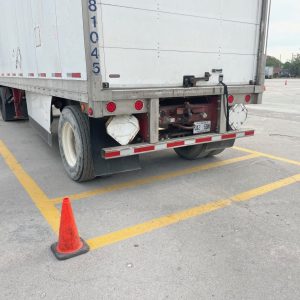
After you understand the movements, practice under test-like conditions. Use cones, marked boundaries, a consistent setup, and the same order of steps you will use on test day. Ask your instructor to watch quietly for one full attempt, then give feedback after you finish. This helps you learn to think independently while still receiving clear corrections.
Keep a simple record of your runs. Write down which maneuver caused problems, what the trailer did, and what correction worked. For example, you may notice that you regularly begin your alley dock too late or that you hold your steering correction too long during offset backing. That pattern tells you what to work on during the next session.
At East USA Trucking School, students can build these skills in a practical training environment with room to repeat maneuvers and prepare for state-authorized testing in one location. The value of a training yard is repetition. You need enough space and enough attempts to turn a confusing movement into a familiar one.
Prepare Your Mind for Test Day
The final days before your skills test are not the time to make every maneuver more complicated. Focus on your setup, mirror checks, speed control, and recovery decisions. Arrive rested, wear footwear that gives you secure pedal control, and listen carefully to the examiner’s instructions before moving the truck.
If you make a small mistake, do not assume the test is over. Take a breath, stop if needed, and use the tools you practiced. A safe correction is better than an emotional reaction. Examiners are looking for control, awareness, and safe vehicle operation.
Backing a tractor-trailer is a skill that pays off long after the CDL test. Every careful practice session builds the patience and judgment you will need at docks, job sites, truck stops, and tight customer locations. Stay slow, watch the trailer, and trust the routine you trained.