A missed word during a pre-trip inspection can cost you time, confidence, and a testing appointment. Spanish CDL instruction gives Spanish-speaking students a clearer way to learn the material, ask questions, and build the driving skills required for a commercial license. For adults in Orlando and Central Florida who are ready to move into trucking, the goal is simple: understand the process, train on the equipment, pass the required tests, and get to work.
Language should not be the barrier between you and a better-paying career. But CDL training is not only about translating a handbook. You need to understand safety rules, vehicle control, air brakes, backing procedures, road signs, and the routine decisions professional drivers make every day. Good bilingual instruction helps connect those pieces in a way that makes sense.
What Spanish CDL Instruction Should Cover
A useful Spanish-language CDL program starts before you get behind the wheel. Most new drivers need help preparing for the Commercial Learner’s Permit, often called a CLP. This includes the general knowledge exam and, depending on your goal, endorsements or additional tests such as air brakes and combination vehicles.
Spanish-speaking instructors can explain difficult terms in plain language, clarify questions that may be confusing in English, and help you study with purpose instead of memorizing answers without understanding them. That matters because the written test is only the first step. The knowledge you gain will show up again during your pre-trip inspection, skills test, and road test.
After permit preparation, training should move to practical work. For a Class A CDL, students need time in and around a tractor-trailer. They should learn how to conduct a complete pre-trip inspection, make controlled turns, shift safely when training on a manual transmission, back into designated spaces, and operate in real traffic conditions.
The strongest programs do not leave students watching from the passenger seat. They create repeated practice opportunities in a training area before putting students under pressure on public roads. A large practice lot gives new drivers room to make corrections, learn reference points, and build the muscle memory needed for backing maneuvers.
Spanish CDL Instruction Is More Than Translation
A truck driver works in an industry where clear communication affects safety. Federal commercial driving rules include English-language expectations for drivers. Road signs, dispatch instructions, inspection reports, shipping documents, and interactions with law enforcement may require English comprehension.
That does not mean a student must enter training already fluent in every trucking term. It means the best Spanish CDL instruction supports learning in Spanish while also introducing the English vocabulary drivers will use on the job. Terms such as “tractor protection valve,” “service brake,” “clearance,” “hazardous materials,” and “securement” should not be unfamiliar on test day or at work.
There is a practical balance. If an instructor explains a maneuver in Spanish, the student can understand the reason behind each step. If the student also learns the English words connected to that maneuver, they are better prepared for the testing environment and for employment. This approach builds knowledge that lasts beyond one exam.
Testing rules and language options can vary by state, test type, and endorsement. Ask the school directly which materials are available in Spanish, what language will be used during training and testing, and what you must complete in English. Getting clear answers early prevents surprises later.
The Class A CDL Path for New Drivers
For most students entering over-the-road, regional, local delivery, or construction hauling work, a Class A CDL creates the broadest range of opportunities. It generally allows you to operate combination vehicles, including tractor-trailers, when properly licensed and within applicable restrictions.
Your training path usually includes these stages:
- Permit preparation. Study the required knowledge areas and pass the tests needed for your CLP.
- Entry-level training. Complete the federally required Entry-Level Driver Training for first-time Class A or Class B CDL applicants, when applicable.
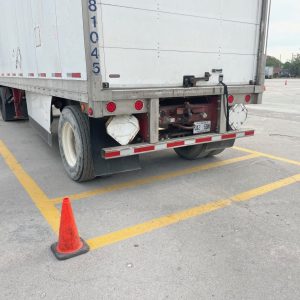
- Yard skills practice. Learn vehicle inspection procedures, straight-line backing, offset backing, alley docking, turns, and safe control of the vehicle.
- Road training. Practice shifting, lane position, intersections, merging, railroad crossings, traffic awareness, and defensive driving.
- CDL skills testing. Complete the pre-trip, basic vehicle control, and road test requirements through the appropriate authorized testing process.
The exact timeline depends on your schedule, how quickly you learn, whether you already have a permit, and the type of license you need. Fast training can be a good fit for a focused student, but speed should not replace practice. If you are struggling with backing or pre-trip recall, more repetitions are usually worth the time.
Why Hands-On Training Matters
You cannot learn to control a tractor-trailer by reading a manual alone. Classroom study helps you pass knowledge tests, but the skills test requires you to perform under observation. You must identify parts of the vehicle, explain safety conditions, maneuver accurately, and drive professionally in live traffic.
Hands-on training gives you a place to make mistakes before they become testing mistakes. A wide turn taken too tightly, an incorrect reference point during an alley dock, or a missed item in a brake inspection can be corrected immediately when an instructor is present. Repetition turns instructions into habits.
Equipment access matters, too. Training on multiple trucks can help students get more opportunities to practice rather than spending the day waiting for a vehicle. If you plan to drive manual transmission equipment, ask whether the program includes manual training. Passing in an automatic vehicle may result in an automatic transmission restriction, which can limit some job options. Removing that restriction later is possible, but it takes additional training and testing.
Questions to Ask Before You Enroll
Price matters, especially when you are changing careers or supporting a family. But the lowest advertised number does not always show what is included. Ask for a direct explanation of tuition, permit preparation, driving hours, testing fees, retest policies, equipment use, and any additional costs.
You should also ask whether the school provides bilingual Spanish-speaking instructors, how much behind-the-wheel training is included, and where testing takes place. Training and state-authorized third-party testing in one location can reduce scheduling problems and help you move from practice to exam day with less confusion.
For many Central Florida students, funding is another major question. Government workforce funding, tuition financing, and other assistance options may be available depending on your situation. Eligibility varies, so do not assume you will qualify, but do not assume you have to pay for everything at once either. A school should explain the options clearly and tell you what documents you may need.
East USA Trucking School serves this need with bilingual instruction, practical Class A training space, multiple trucks, and on-site state-authorized testing. The focus is not on making trucking sound easy. The focus is on giving students an affordable, direct path from permit preparation to job-ready driving skills.
Build Skills That Employers Can Use
A CDL is a credential, but employers also look for drivers who can operate safely, communicate professionally, manage time, and take equipment inspections seriously. Your first job may not be your final destination. Some drivers start with regional freight, local delivery, construction, waste hauling, moving, or other commercial driving roles before finding the schedule and pay structure that fit their lives.
That is why training should prepare you for work, not just a single testing appointment. Learn the pre-trip inspection in the correct order. Practice backing until you understand what the trailer is doing, not just which marker to watch. Ask questions when a rule is unclear. Those habits can protect your license and your livelihood.
If Spanish is the language in which you learn best, use that advantage to build a solid foundation. Then keep adding the English trucking terms and real-world skills that will carry you through the road test, your first orientation, and the miles ahead.